
A surprising new chapter in the global fight against HIV has opened. A 60-year-old German man, who received a stem cell transplant in 2015 to treat acute myeloid leukemia, now appears to have achieved long-lasting remission of HIV after discontinuing antiretroviral therapy in 2018. He is being described as the seventh person worldwide to reach such remission following a stem cell transplant.

The transplant that changed everything

When the man underwent his transplant, his doctors used donor stem cells carrying a single copy of the mutated gene known as CCR5-Δ32. This contrasts with prior successful cases, where donors typically carried two copies.

Before transplant, his immune system was suppressed by chemotherapy. That likely destroyed many of his original immune cells, including those harboring hidden HIV. After transplant the donor cells rebuilt his immune system. Over the years, comprehensive testing of blood and intestinal tissue has found no replication-competent HIV and his HIV-specific antibodies and T cell responses have declined.

This is remarkable because standard understanding had been that donor cells needed to carry two copies of the CCR5-Δ32 mutation — making them effectively resistant to HIV entry. Success with just one copy suggests that full genetic resistance may not be essential for durable remission.

Rethinking what a “cure” might require

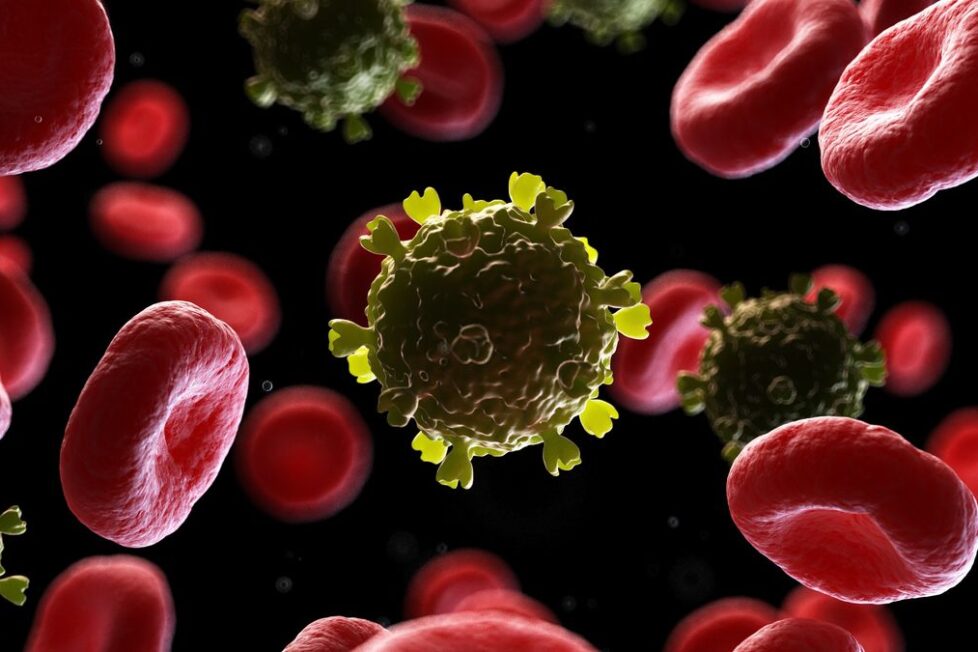
HIV exploits the CCR5 receptor to enter many immune cells, then integrates into their DNA. These infected cells can lie dormant for years, creating what is known as a latent reservoir that often revives if treatment stops.

The new case challenges the assumption that only donor cells fully lacking functional CCR5 can lead to remission. Instead researchers now suggest that the transplant’s success may rely less on complete genetic resistance, and more on the immune system overhaul plus donor immune cells clearing out residual, infected host cells — a mechanism known as graft-versus-reservoir.

That means this case may broaden the possible donor pool substantially and provide a new direction for therapies aiming to mimic this effect via gene editing or immunotherapy.

Why this remains rare

Stem cell transplantation is not a benign intervention. It involves eradicating the existing immune system through chemotherapy, then rebuilding it with donor stem cells — a process with serious risks including graft-versus-host disease or life-threatening infections. For that reason, this procedure so far has only been offered to people who also have malignant blood diseases such as leukemia.

Because of those risks, this is not a scalable cure for the millions living with HIV worldwide. Experts caution that while the new case expands scientific understanding, it does not mean immediate broad access for people living with HIV.

What it means for the future of HIV cure research

This new remission provides fresh hope and renewed direction for researchers. If a single CCR5-Δ32 mutation can be sufficient, then therapies — including gene-editing approaches — might aim for partial modification of patients’ own immune cells instead of full receptor knockout, which may be simpler and safer.

It also strengthens interest in strategies that do not rely solely on genetic resistance but leverage immune system reconstitution or donor-cell mediated clearance of virus reservoirs. If scientists can understand and replicate the mechanisms behind this successful case, that could lead to more practical and less risky treatments.

For regions with high HIV burden such as sub-Saharan Africa, this is not yet a ready solution. But the case represents a scientific milestone — proof that long-term remission without antiretroviral therapy is possible under certain conditions. That can guide research towards interventions that might one day become accessible globally.

A fragile but hopeful step forward

For decades antiretroviral therapy transformed HIV from a death sentence into a chronic but manageable condition. But latent reservoirs meant a true cure seemed out of reach. The emergence of cases like this one shows that HIV may not always be invincible. Given a radical immune reset and the right donor cells, the virus might be eliminated.

At the same time, the risks, costs, and medical complexity mean this remains an exceptional outcome. The transplant method is unlikely to become a widespread cure. But as a proof of principle, this “next Berlin patient” pushes the boundaries of what we understand about HIV remission.

The challenge now is turning this rare success into safe, scalable, accessible treatments for millions worldwide. Researchers and advocates will need to push hard on gene therapy, immunotherapy, and reservoir-targeting strategies — drawing on what this case has taught us.

Sign up to receive the most diverting fiction, essays, analyses and news across Africa in your inbox, on Monday every week.

We don’t spam! Read our privacy policy for more info.

Check your inbox or spam folder to confirm your subscription.