1959: The Day America Delivered the Mail by Cruise Missile
In 1959, the United States Navy launched 3,000 letters aboard a nuclear-capable cruise missile. The experiment lasted 22 minutes. The fantasy behind it lasted much longer.




In 1959, the United States Navy launched 3,000 letters aboard a nuclear-capable cruise missile. The experiment lasted 22 minutes. The fantasy behind it lasted much longer.
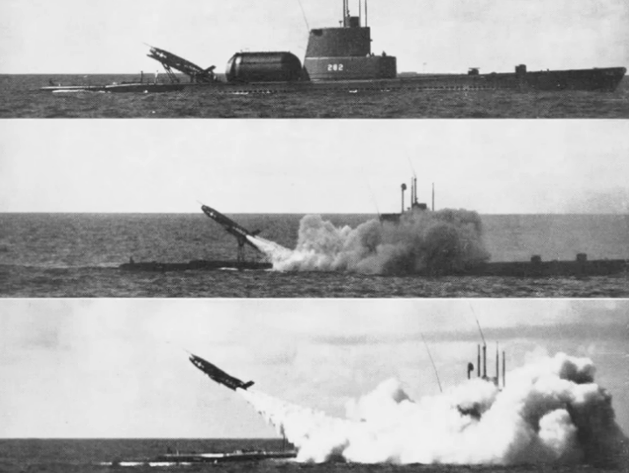
On the morning of June 8, 1959, a United States Navy submarine surfaced in Atlantic waters off the coast of Florida carrying one of the strangest payloads of the Cold War. Mounted atop the vessel sat a Regulus I guided missile, a sleek, winged machine built to carry nuclear destruction across hundreds of miles. The submarine, the USS Barbero, had once hunted enemy ships during World War II. By the late 1950s it had become part of America’s strategic nuclear arsenal, one of several submarines modified to launch cruise missiles in the event of atomic war.
But on this particular morning, the missile’s warhead compartment held something altogether different. Inside were 3,000 pieces of mail.
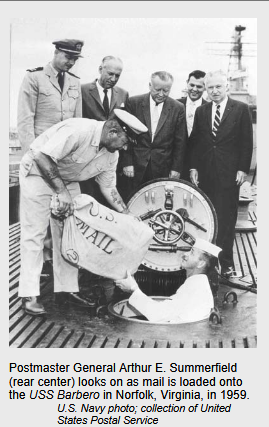
The launch was not a military exercise in the traditional sense. It was a public demonstration jointly orchestrated by the U.S. Navy and the United States Post Office Department, intended to showcase a futuristic vision of communication at the height of America’s technological optimism. The missile lifted from the submarine’s deck in a burst of smoke and fire, streaked across the Atlantic sky, and landed successfully at the Naval Auxiliary Air Station in Mayport, Florida, approximately 100 miles away. The entire journey lasted just 22 minutes.
The letters survived intact.

The event immediately generated headlines across the country. Newspapers treated it with a mixture of awe, amusement, and patriotic enthusiasm. Television crews documented the launch. Postal officials celebrated it as evidence that America stood at the forefront of technological civilization. Arthur Summerfield, the Postmaster General under President Dwight D. Eisenhower, proclaimed that guided missiles would someday transport mail across continents in a matter of hours.
“Before man reaches the moon,” Summerfield declared confidently, “mail will be delivered within hours from New York to California, to Britain, to India or Australia by guided missiles.”
History would prove him spectacularly wrong. Missile mail never evolved beyond this single ceremonial demonstration. No global network of rocket-delivered letters emerged. No missile post offices appeared in suburban America. The idea disappeared almost as quickly as it arrived. And yet, more than six decades later, the experiment continues to fascinate historians, philatelists, Cold War scholars, military enthusiasts, and internet audiences encountering the story for the first time in disbelief. Partly this fascination comes from the sheer absurdity of the image itself: a nuclear-capable cruise missile transformed into a postal courier. But the deeper reason lies elsewhere.
The missile-mail experiment captured the emotional atmosphere of mid-century America with extraordinary precision. It reflected an era intoxicated by technological possibility, frightened by nuclear annihilation, and convinced that the future would arrive through rockets.
To understand why missile mail briefly seemed plausible, it is necessary to understand the cultural environment in which it emerged. The late 1950s represented perhaps the most futurist period in American history. The United States had emerged from World War II economically dominant and scientifically transformed. Radar, jet propulsion, rocketry, nuclear energy, and early computing systems had altered not only warfare but public imagination itself.
Americans were increasingly surrounded by technologies that seemed to have arrived directly from science fiction. Jet aircraft crossed oceans in hours. Television entered living rooms nationwide. Atomic weapons demonstrated almost supernatural destructive power. The Soviet launch of Sputnik in 1957 intensified the sense that humanity had entered a radically new technological age, one in which old assumptions about distance, speed, and communication no longer applied.
In magazines, advertisements, and government propaganda, the future was presented as inevitable, exhilarating, and mechanized. Artists illustrated families traveling in flying cars and vacationing on the moon. Engineers predicted atomic-powered automobiles, undersea colonies, robotic domestic servants, and fully automated cities. American children grew up in a cultural environment saturated with rockets.
The Cold War accelerated these fantasies. Missile technology became synonymous with national prestige. The ability to build faster, longer-range rockets symbolized scientific supremacy itself. The same machines that threatened civilization also represented modernity’s highest achievement.
Missile mail emerged directly from this mindset.
Although the 1959 launch appeared startlingly original, the concept of rocket mail had existed for decades. Inventors and enthusiasts in Europe and elsewhere had experimented intermittently with rockets carrying mail since the early 20th century. Austrian engineer Friedrich Schmiedl became one of the most famous pioneers of rocket mail during the 1930s, launching small rockets between Austrian towns carrying postcards and letters. Similar experiments appeared in Germany, India, Cuba, and Britain.
Most of these efforts operated somewhere between serious engineering and elaborate publicity stunt. Rocket mail appealed especially to stamp collectors and futurists fascinated by aviation and emerging space-age technologies. But technical limitations consistently undermined practicality. Rockets exploded frequently. Guidance systems remained primitive. Payload capacities were tiny. Conventional air transport improved much faster than rocketry did.
Still, the idea retained symbolic power.
By the late 1950s, however, the United States possessed something previous rocket-mail enthusiasts lacked: sophisticated military missile systems developed through massive Cold War investment.
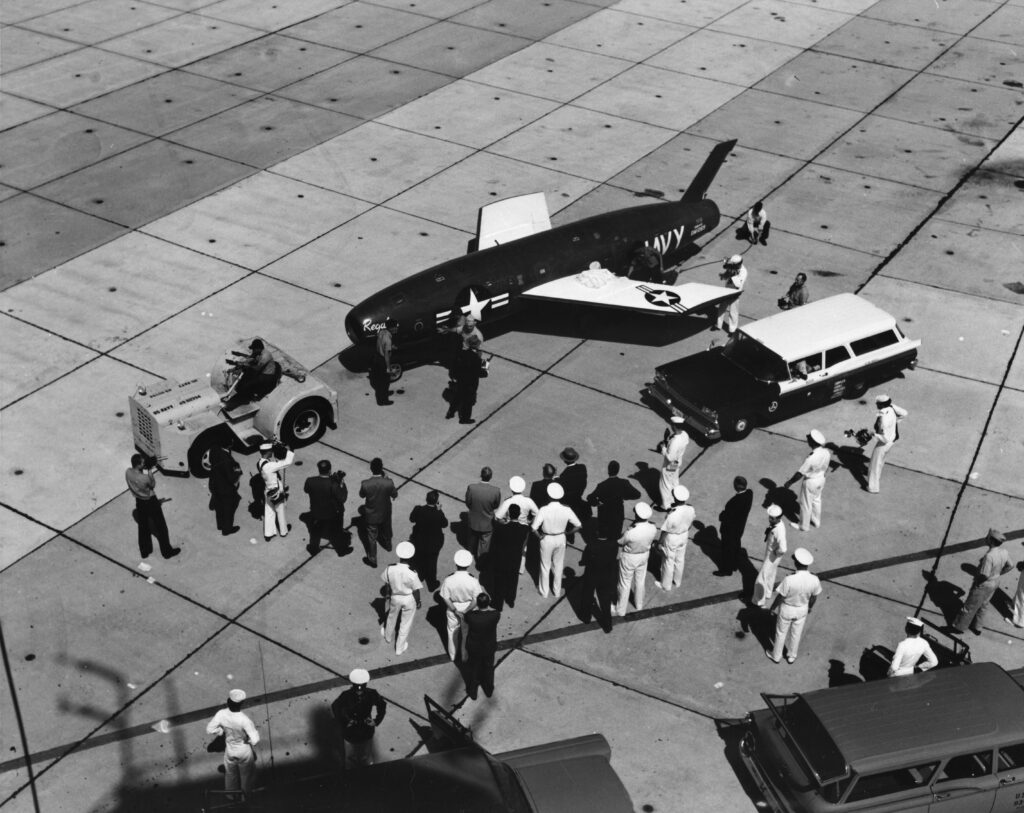
The Regulus I missile used in the Barbero experiment was developed by the Chance Vought Aircraft Company, measured more than 32 feet long, carried folding wings, and operated using a turbojet engine. Booster rockets launched it into flight before the main engine sustained cruising speed. Unlike ballistic missiles that traveled through space on predictable arcs, the Regulus functioned more like an unmanned aircraft, capable of guided atmospheric flight over long distances. The missile was designed to carry a nuclear warhead.
The USS Barbero itself reflected the rapid transformation of military strategy during the early Cold War. Originally commissioned as a Balao-class submarine during World War II, the vessel was later converted into a guided-missile submarine as the Navy experimented with sea-based nuclear deterrence. Before ballistic missile submarines like the Polaris fleet became dominant, Regulus submarines represented an important component of America’s strategic arsenal.
This military context gave the missile-mail experiment its surreal emotional texture. The technology involved was not symbolic or hypothetical. The missile resting on the submarine’s deck had been built for thermonuclear war. Yet on June 8, 1959, Navy personnel loaded it with commemorative envelopes.
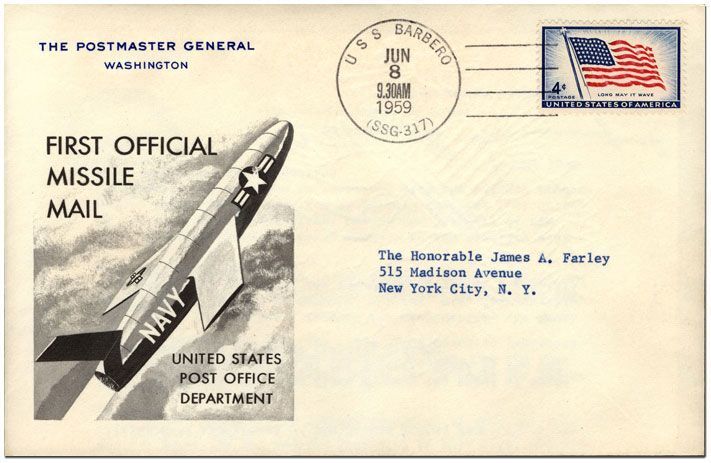
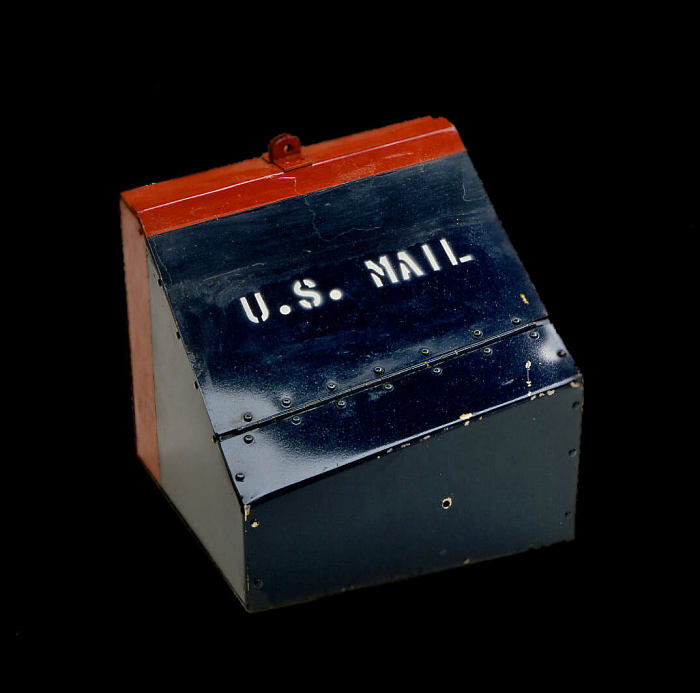
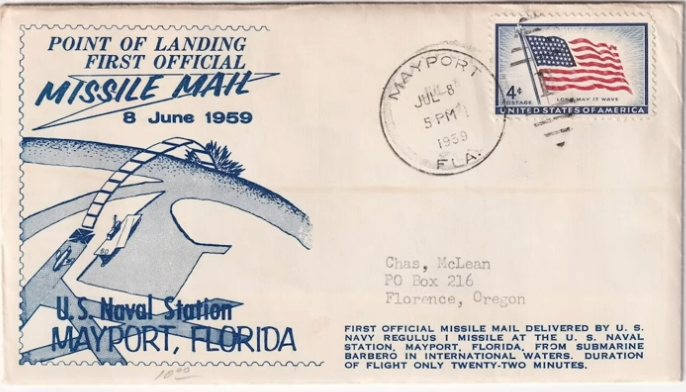
The mail containers themselves were specially designed metal canisters painted in the red, white, and blue colors associated with American mailboxes. According to Postal Museum records, each container carried approximately 1,500 letters. Most of the envelopes were addressed to political leaders, members of Congress, military officials, diplomats, and other prominent figures. Each envelope included commemorative markings indicating it had traveled aboard the “First Official Guided Missile Mail.” Today, surviving examples remain prized collectibles among philatelists and postal historians, physical artifacts from one of the most eccentric experiments in American communication history.
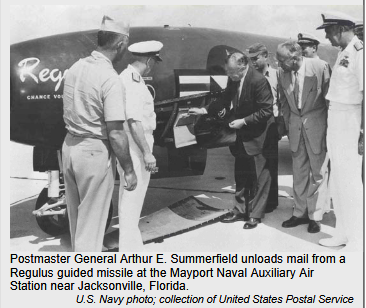
The launch itself was carefully choreographed for publicity impact. Reporters and photographers documented the preparation sequence. Postal officials posed proudly beside the missile and mail containers. Navy officers treated the event with formal seriousness. The resulting photographs now appear almost dreamlike, combining the visual language of military power with the cheerful symbolism of civilian bureaucracy.
The contradiction feels almost too perfect. But contradictions like this were deeply characteristic of Cold War America. The same society teaching schoolchildren to hide beneath desks during nuclear drills also promoted atomic energy as the foundation of a brighter consumer future. Americans built fallout shelters while simultaneously celebrating the coming technological utopia. Missile mail fit neatly into this cultural duality.
For the U.S. government, the experiment offered significant propaganda value. Following Sputnik, American leaders remained acutely sensitive to perceptions of technological inferiority. Public demonstrations involving advanced missile systems carried geopolitical meaning even when framed as harmless civilian spectacles.
The launch suggested that American missile technology had become so sophisticated, so reliable, and so precise that it could casually transport ordinary mail. The underlying message was impossible to miss: if the United States could deliver letters by guided missile, it could certainly deliver nuclear warheads.
At the same time, the experiment softened the terrifying implications of missile technology by associating it with everyday civilian life. Here was the same machinery associated with atomic apocalypse now repurposed for birthday greetings and commemorative correspondence.
Summerfield, the Postmaster General who championed the demonstration, embodied the era’s confidence in technological modernization. A former businessman and automobile executive, he aggressively explored new transportation systems and sorting technologies intended to increase efficiency and speed. Summerfield viewed missile mail not merely as a novelty but as a glimpse into what he believed was an inevitable future.
His predictions now sound almost fantastical, but at the time they aligned closely with broader cultural assumptions about technological progress. Mid-century Americans frequently believed that if a machine could be built, it would eventually become commercially normalized. Rockets existed. Therefore rockets would eventually become ordinary.
This logic shaped countless failed predictions of the era. Engineers seriously explored nuclear-powered aircraft. Designers envisioned atomic vacuum cleaners and radioactive household appliances. Futurists assumed flying cars would become standard suburban transportation.
Missile mail belonged to this same imaginative ecosystem.
In practical terms, however, the idea never made sense.
The costs alone were astronomical. Guided missiles required enormous financial investment compared with conventional transportation systems. Commercial aviation already carried mail quickly, reliably, and far more cheaply. By the late 1950s, jet aircraft were dramatically reducing delivery times across continents without requiring military-grade rocketry.
There were also obvious concerns regarding safety and reliability.
Rocket systems during the 1950s remained notoriously fragile. Explosions, guidance failures, mechanical malfunctions, and navigational errors occurred regularly in both military and civilian rocket programs. A nationwide postal network dependent upon missile launches would have been catastrophically inefficient.
Even supporters understood this.
In many ways, missile mail functioned less as a genuine transportation proposal than as technological theater, a carefully staged performance designed to communicate national confidence during a period of geopolitical anxiety.
And as theater, it succeeded brilliantly.
News coverage of the event emphasized wonder and novelty. The launch transformed an instrument of war into an object of curiosity. Nuclear weapons had introduced unprecedented existential fear into ordinary life. The possibility of sudden annihilation haunted politics, culture, education, and public psychology. Missile mail briefly inverted that emotional narrative. Instead of imagining rockets descending toward cities carrying thermonuclear warheads, Americans were invited to imagine rockets carrying friendly letters.
The surviving artifacts from the experiment carry an unexpectedly emotional quality. Preserved missile-mail envelopes, now housed in museums and private collections, appear delicate and ceremonial compared with the machinery that transported them. Their commemorative markings and carefully stamped cachets evoke a world profoundly confident in its technological trajectory.
The Smithsonian National Postal Museum preserves several examples, along with archival materials documenting the launch. Looking at these artifacts today produces a peculiar sensation. The future they anticipated never materialized, yet the optimism embedded within them remains unmistakable.
Cold War America is often remembered primarily through its anxieties: nuclear brinkmanship, espionage, ideological conflict, and existential fear. But the missile-mail experiment reveals another dimension of the era, one defined by extraordinary confidence in technological ingenuity. Americans genuinely believed science and engineering could solve nearly any problem, compress any distance, conquer any obstacle.
Even the threat of nuclear annihilation did not entirely extinguish that faith. Instead, the culture attempted repeatedly to transform terrifying technologies into instruments of convenience and progress. Atomic energy would power cities. Rockets would shrink the globe. Missiles would deliver the mail.
Modern societies continue searching for hopeful civilian applications within dangerous technologies. Artificial intelligence may automate warfare, but it may also revolutionize medicine. Space systems may intensify geopolitical rivalry, but they also connect billions through communication networks.
The central dilemma remains unchanged from 1959: whether humanity can control the meaning of its inventions.