The Tech Sisters connecting, coding and creating an Ivorian ecosystem
"Tech Sister" Longa Andrea Mbuyamba is working to change who gets to shape West Africa’s tech ecosystem.


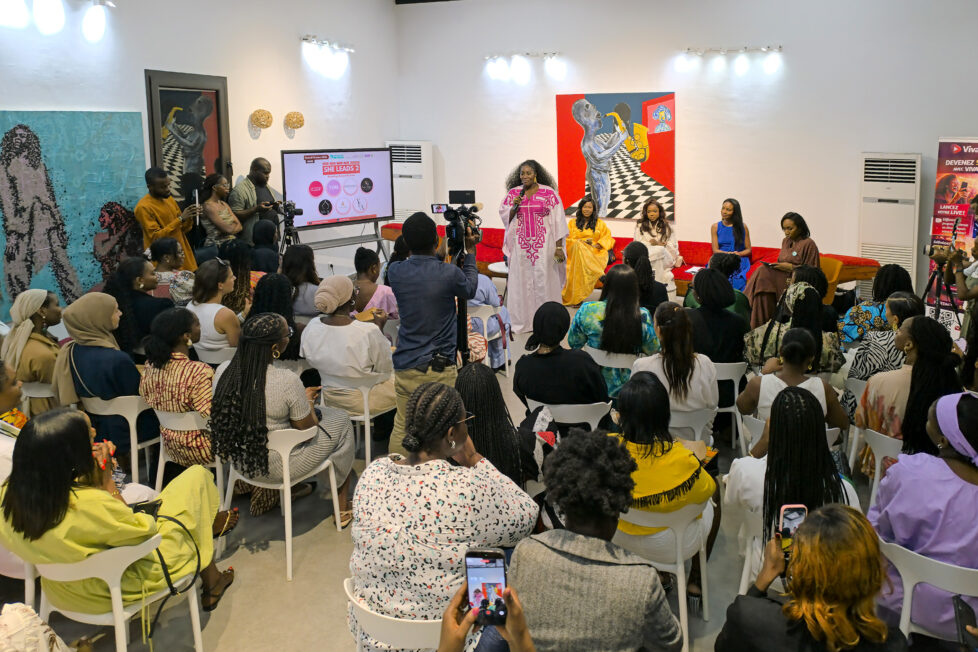


"Tech Sister" Longa Andrea Mbuyamba is working to change who gets to shape West Africa’s tech ecosystem.
Nahis Regis, bird story agency
In the period that Longa Andrea Mbuyamba hung out at the Congo Synergie Club on Rue La Boétie in Paris, conversations about identity, innovation, and belonging often stretched late into the night. With her days were filled by diaspora-led initiatives such as Panafrican Stories, she managed to forge a strong connection with the African continent. After a while, however, even her tech background failed to bridge the gap between her home in Europe and her passion point, Africa.
Today, across an open-plan office in the Ivory trade center, in Abidjan, Mbuyamba is seated at a wooden desk, her attention fixed on the glow of her laptop. Around her, colleagues move through the rhythm of a typical workday: keyboards tapping, quiet conversations unfolding, the hum of a growing digital economy in motion.
Mbuyamba remains focused. The work on her screen is part of a larger shift, one that extends beyond the room, beyond the city, and across West Africa’s evolving tech landscape.
“I felt that I needed to be on the ground in order to have a greater impact. So as soon as I had an opportunity to come to Côte d’Ivoire, I took it. In my mind, I told myself: if it works, great; if it doesn’t, it’s not a problem.”
Her move to Côte d’Ivoire in 2021 marked a turning point.
Across the region, women continue to show strong participation in STEM education. Yet their presence in the technology workforce remains disproportionately low. In Côte d’Ivoire, efforts to close that gap are gaining ground, shaped in part by professionals like Mbuyamba who are working to redefine access, visibility, and opportunity.
With a career rooted in digital transformation, cybersecurity, and systems change, what Mbuyamba encountered in Ivory Coast was a rapidly evolving digital ecosystem—one defined by growth, modernization, and increasing investment in cybersecurity and digital infrastructure. But beneath that momentum, a structural imbalance remained visible.
“The key decision-makers and visible actors were mostly men. So little by little, we simply brought together women who, like me, were in professional environments where they felt somewhat isolated or didn’t necessarily have access to peers in our field.”
While women make up a significant share of STEM graduates, they remain underrepresented in the workforce. According to the World Bank, women account for around 30% of the workforce in science and technology fields in Sub-Saharan Africa, with even lower representation in more specialized ICT roles.
That realization became the foundation of her work, not only to participate in Africa’s digital transformation, but to influence who is included in shaping it.
In 2023, this led to the creation of Abidjanaises In Tech, an initiative designed to address isolation, expand access, and build structured support systems for women in the sector.
“We came together, we connected, we inspired each other over time, we launched many initiatives, organized events, and we became a community.”
What began as informal gatherings quickly evolved into something more deliberate. Through its broader extension, Africaines In Tech, the network now connects nearly 700 women across Côte d’Ivoire, Senegal, Togo, Cameroon, and Morocco. Its activities range from technical workshops to mentoring sessions and curated events, all aimed at strengthening both technical skills and professional confidence.
For participants, the impact is already visible.
Zeinabou Sidibé, founder and CEO of Afrisends Logistics Services, sees digital integration as essential to business growth.
“The integration of technology into African businesses today is inevitable, and the sooner we realize it, the better. Initiatives like those led by Andrea through Abidjanaises In Tech, particularly technology training, are an invaluable growth lever for women and entrepreneurship in Côte d’Ivoire.”
As Mbuyamba navigated the tech ecosystem, her reflections deepened into broader questions about representation and agency.
As a woman in tech in Africa, what is my role in what is unfolding here? How much space do I take? How much do I build? And how do I enter opportunities that seem both present and out of reach at the same time?
The answers began to take shape through dialogue—small, intentional gatherings of women she would later describe as her “digital sisters.” These spaces became points of exchange, where professional challenges intersected with lived realities: navigating bias, managing expectations, and sustaining visibility without burnout.
Crucially, the initiative places a strong emphasis on measurable impact.
“We track the creation of businesses, we track job creation, and we track the creation of impactful opportunities. When we talk about impactful opportunities, we mean opportunities that give strong visibility to a woman and allow her to generate business, clients, and more. This is something we closely monitor by regularly asking our members to report the different opportunities they have access to.”
This focus reflects Longa’s background in digital transformation, where systems thinking and measurable outcomes are central to long-term change.
The broader significance of this work is echoed across the region’s innovation ecosystem. At SIADE, an innovation-focused event held on April 13–14, 2026, at the Félix Houphouët-Boigny Stadium in Plateau, Abidjan, conversations around technology and inclusion highlighted the role of women in shaping economic growth.
Writer and tech entrepreneur Ibrahima Theo Lam emphasized the importance of aligning digital tools with existing forms of entrepreneurship.
“For me, women have always tried things that have worked, and with technology we can initiate programs that strengthen what they already have. This will benefit the community. When a woman promotes an activity with her own initiative, her own thinking and environment, if we want to amplify it, it is important to bring in tools like digital technology and artificial intelligence. It needs to be structured, coordinated, and women must be at the center.”
Across Abidjan, from coworking spaces to conference halls, similar conversations continue to unfold as the country’s tech ecosystem expands. What distinguishes initiatives like Abidjanaises In Tech is their intentional focus—not only on creating access, but on ensuring that women are visible participants in shaping the future of the digital economy.
For Mbuyamba, the work remains ongoing. In a sector defined by constant change, her approach is less about delivering a finished solution and more about building systems that can sustain inclusion over time.
bird story agency.