The Life After The Moment Everyone Remembers
I was seventeen when I dived into the sea in Rimini, Italy, in 1988. The consequences were immediate and permanent: a cervical spinal cord injury and tetraplegia.
 by
by 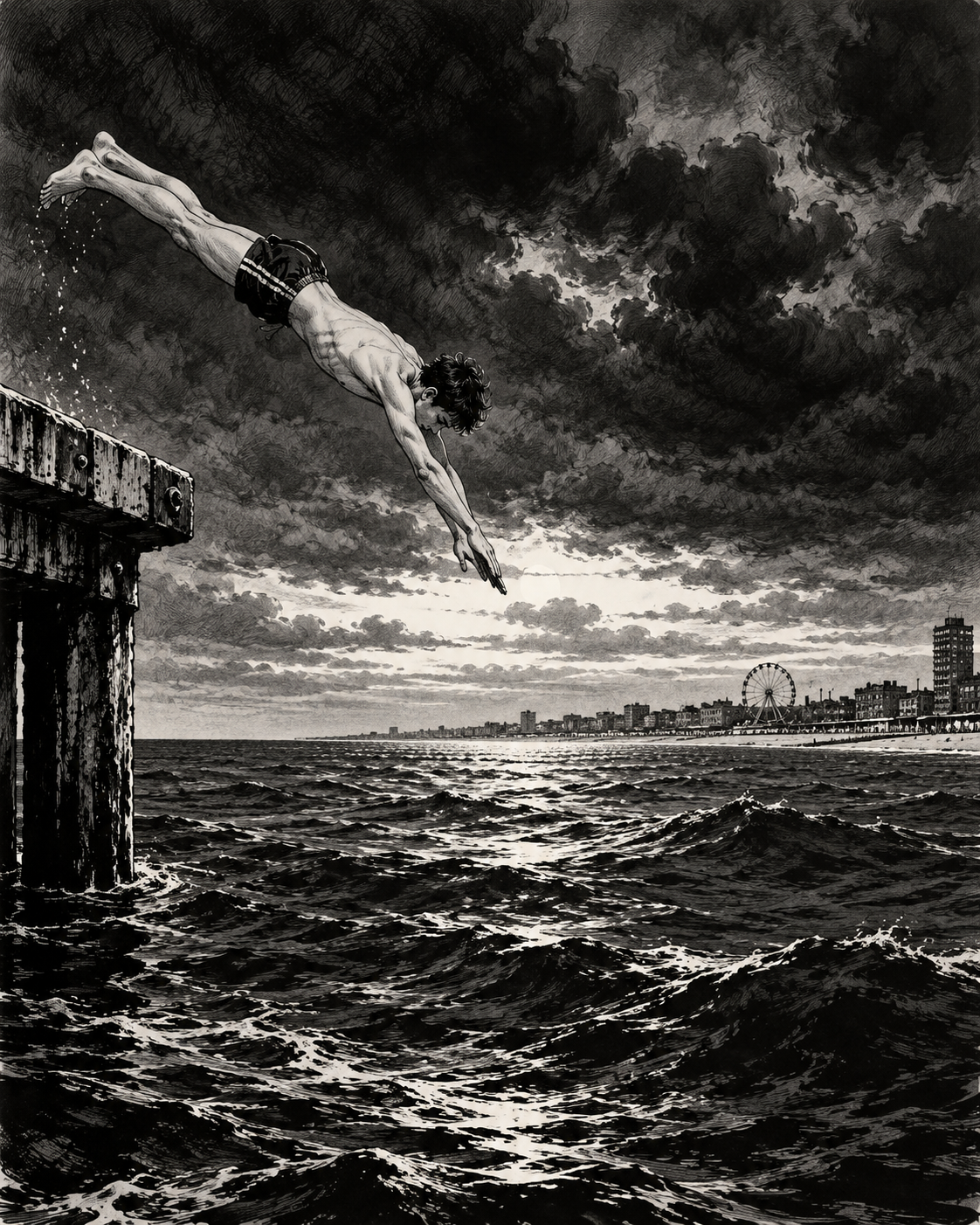


I was seventeen when I dived into the sea in Rimini, Italy, in 1988. The consequences were immediate and permanent: a cervical spinal cord injury and tetraplegia.
by There is a strange way in which a single moment can become larger than the life that follows it.
I was seventeen when I dived into the sea in Rimini, Italy, in 1988. The consequences were immediate and permanent: a cervical spinal cord injury and tetraplegia. When people hear that part of my story, they often imagine that they have reached its centre. In reality, they have reached only its beginning.
Almost four decades have passed since then. The dramatic event lasted seconds. The life that followed has lasted thirty-eight years.
That distinction matters because disability is often narrated through the language of before and after. Before, there is movement, possibility, youth. After, there are wheelchairs, assistance, hospitals and limitations. It is an efficient narrative structure, but human lives are rarely so simple. The years after my injury have contained marriage, fatherhood, travel, work, writing, bureaucracy, friendship, loss, frustration, ordinary mornings and difficult nights. They have contained decisions — thousands of them — even when I have needed another person’s hands to carry many of those decisions out.
This is where I learned one of the most important distinctions of my adult life: dependence is not the opposite of autonomy.
I need extensive physical assistance. Someone helps me get out of bed. I use a power wheelchair. Many ordinary actions require equipment, planning or another person. From the outside, this can look like a life directed by others. But needing someone to perform an action is not the same as surrendering the right to decide what that action should be.
If another person helps me dress, I can still decide what I want to wear. If someone assists me in travelling, I can still decide where I want to go. If I cannot physically turn a page or type in the conventional way, I can still decide what I want to read and what I want to write. The body may require assistance while the person remains fully present as the author of his choices.
That sounds obvious when written down. In daily life, it is not always treated as obvious.
Systems designed to help disabled people naturally need to measure needs. Forms ask what a person cannot do. Medical reports describe deficits. Assessments classify dependence. These tools may be necessary, but repeated often enough they can create a distorted portrait: a person becomes a list of functions that require assistance.
The danger is subtle. When institutions constantly ask what you cannot do, other people can begin to assume that physical dependence also means diminished authority over your own life. Sometimes even well-intentioned help crosses that line. A decision is made because it is easier for the helper. A schedule is organised around the service rather than the person. A choice is treated as optional because carrying it out requires extra effort.
Over the years I have learned that genuine assistance does something very different. It does not replace a person’s will; it makes that will practicable.
This is especially visible in travel. For someone with major mobility limitations, a journey is rarely just a ticket and a suitcase. It can involve accessible transport, station assistance, suitable accommodation, equipment, timing and coordination. When all those elements work together, the result is not simply logistical success. The result is freedom: the possibility of being somewhere because I chose to be there.
The same principle applies at home. Personal assistance is sometimes described only in terms of care, but at its best it is also infrastructure for self-determination. A ramp does not decide where someone goes. A wheelchair does not decide why someone leaves the house. An assistant should not decide what kind of life the person receiving assistance is allowed to build. These things create access to choices; they should not replace the choices themselves.
My family has made this distinction concrete. I am a husband and a father. Those roles cannot be reduced to the physical tasks I can or cannot perform. Parenthood is not measured only by lifting a child, driving a car or carrying shopping bags. It is also presence, responsibility, listening, judgement, affection, boundaries and continuity. Marriage is not a calculation of who performs which physical action. It is a relationship between people who continue to make a life together.
None of this means that severe disability is easy, or that attitude erases physical reality. I distrust stories that turn disability into a motivational slogan. Determination cannot make an inaccessible building accessible. Optimism cannot replace adequate assistance. Courage does not repair a broken lift or create a service that does not exist. There are limits that are real, and there are days when those limits weigh heavily.
But there is another mistake at the opposite extreme: assuming that because some limits are permanent, the person’s life must also become permanently smaller.
Writing has given me a way to examine that assumption. In my autobiography, “The Voice of Silence – What Words Do Not Say”, I tried to resist making the dive in Rimini the only gravitational centre of the story. It belongs there, of course. It changed my body and altered the practical conditions of everything that came later. But a biography that stopped emotionally at seventeen would erase the man who came after the boy.
That man has lived for decades with dependence and decision-making side by side.
Perhaps this is the broader lesson I have drawn from my experience. Human beings are more interdependent than we usually admit. Everyone relies on systems, technologies, families, colleagues and communities. Disability often makes that dependence more visible. Visibility, however, should not be confused with absence of freedom.
The question is not whether a person needs help. The more important question is what the help makes possible — and whether the person receiving it remains the one who decides the direction.
Thirty-eight years after that dive, I do not measure my life by pretending the injury never happened. Nor do I measure it by the list of things my body cannot do. I measure it more accurately by the choices that remained mine, the relationships that grew, the places I reached, the words I wrote and the decisions I continued to make.
The moment everyone remembers lasted seconds.
The life after it is the real story.