
Behind me, the skyscrapers of Nairobi grew smaller and smaller, disappearing into the clouds. You’d think they were hands, fingertips brushing through the clouds as though they were hair. Up there it was always quiet, but down below it swarmed with people pushing through dense pedestrian zones. Matatus honking competitively, carrying people through Nairobi day after day.  Nairobi — the only metropolis with a national park — began as a railway depot, a stop on the way to Lake Victoria.

It did not take long before Nairobi’s modernist highways and urban infrastructure dissolved into abandoned wilderness in the north the Savannah, where the sun rose and set like a film. Some called it “the perfect Africa” — the one that justifies six-thousand-euro safaris to see lions marching through the plains, their paws pressing into dead earth.

This place of silence was declared a “Closed Area” by British occupiers in 1902 — a buffer zone, created because they considered the land economically worthless. It became the Northern Frontier District, the NFD. The Outlying Districts Ordinance of 1902 turned northern Kenya into an invisible prison. Like dirt swept into the last corner. A British officer wrote at the time: “There is only one way to deal with the northern territories: to give them the protection that can be afforded under the British flag, and otherwise leave them to their own customs.”

In 1934, additional laws legalized collective punishment. The British built neither roads nor schools nor hospitals. While millions flowed into infrastructure in the Kenyan highlands, the British invested nothing in the NFD. They controlled the north but never developed it.

You might think Kenyan independence in 1963 would change something. Instead, old laws were simply carried over. The only difference was the flag. When the Shifta War broke out, the Kenyan government responded with a thirty-year state of emergency. Neglected first by the British, then by their own government, it took nearly four decades for the gates of this invisible prison to open.

This is the invisible prison that took my breath away as more mountains slipped past like the wise giants of the land. The more I understood the value of my surroundings, the more I could see how the British had failed to see it. The British had not only imprisoned people, they had placed themselves above nature too. They came to the north with their question: “What is all this worth?” The British demanded an answer from nature, but the Samburu demanded nothing from her. They had lived in it for centuries, passed its secrets across generations. They knew what herbs protected animals from parasites, what saps treated disease.

When the British came, they looked at the expanses and subjugated the people and their entire land as possessions of the British Empire. With a few strokes of a pen at the Berlin Conference in February 1885, in a room where no African was permitted to sit, boundaries were drawn and ownership legalized. It had begun much earlier with the name of the land itself. In 1849, the missionary Krapf heard the name “Kii Nyaa” from a Kamba leader — Ostrich Mountain, named for the black and white rocks that resembled the bird’s plumage. He wrote “Kenia” in his diary because he couldn’t pronounce it correctly. The Kikuyu called it “Kirinyaga” — the mountain with the white patches. Seventy-one years later, in 1920, the British made it the official name of the colony. A British official warned at the time: “We are creating a meaningless word.” His opinion, tagging a land and a people as meaningless, was an act of erasure.

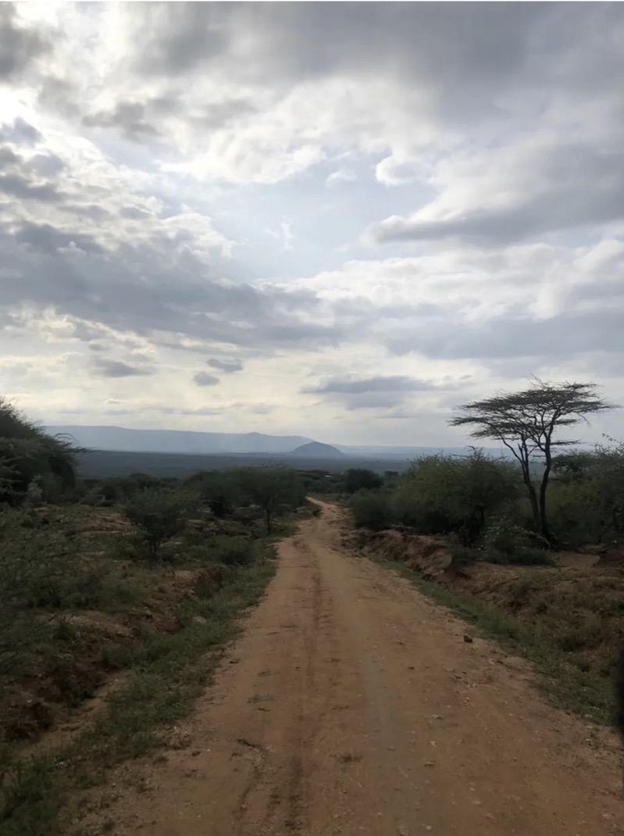
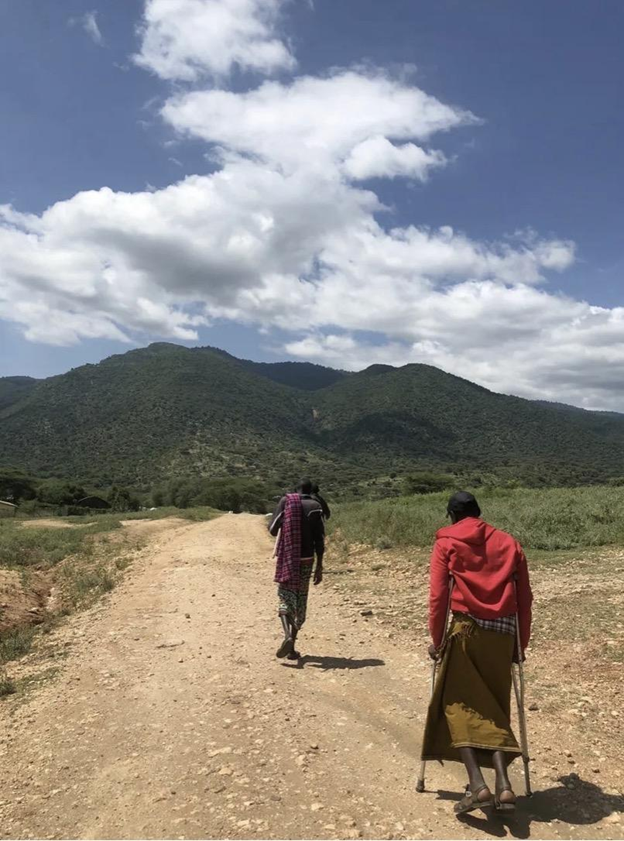
After hours of driving I arrived in Maralal, a small burgeoning town where everyone knew everyone. It didn’t take long before I started drawing attention. Withdrawn in a small guesthouse, I planned my next steps and let the new impressions settle. The following days I spent building connections, which wasn’t difficult — Maralal was full of young people.After just two days I found myself on the back of a motorcycle — a Boda Boda — driven by a young Samburu who was studying in a university in Maralal. We rode through various places, far from town. In the shadow of the mountains, far from any tourist trail. The deeper we went, the more I saw the Samburu that nobody wanted to see for decades: the Samburu who had suffered the extremes of marginalization.

The Samburu and the Maasai are close relatives. They share the same language — Maa — and the same origins from the Nile. But unlike the Samburu, the Maasai who had their land stolen by white settlers, were marketed as a tourist product and became recognizable globally. Their cultural rituals like lion hunting — used to mark a young Maasai’s passage into manhood, were, on one hand marketed as a tourist attraction, while on the other banned because it violated the Western concept of animal welfare and conservation. They preferred to stage the Maasai as warriors of “authentic Africa” and brand them in ways that justified the exotic demands of the white tourist. The Maasai I met wanted to travel, to study, to see the world. Instead, many were condemned to remain warriors, ideally without speaking a word of English, their power of self-determination systematically stripped away. They were only accepted as the “noble, wild warrior,” exotic enough for the photo, controlled enough to satisfy the market.

The Samburu, meanwhile, were locked away and forgotten and left free to live their traditions. Decades of colonial marginalization, fortunately, forestalled the desecration of their cultural practices.

One evening in Maralal, I was approached by a group of young Samburu men. They introduced themselves and greeted me with respect. I, instinctively, extended my hand for a handshake. The young man in front of me smiled. He was nervous. His hand came closer, then at the last second he pulled it back, laughed, and ran off. Confused, I turned to the young man beside me and apologized. I asked if I had been disrespectful, and he nodded, but told me not to feel bad — everyone knew I wasn’t from here. He explained that even in Maralal, many young Samburu stayed true to their traditions. I felt shame, but also fascination and gratitude for having learned something.

Two days later I was on the back of a motorcycle again. The Samburu driving me brought me to his home — and there I encountered it again. After meeting his family, hearing about the initiation he had to pass, and seeing the nature surrounding his home, food was ready. He led me to a small house away from the women and away from where we had been sitting. He saw my confused expression and immediately explained. He said: “Men never eat with women.” Especially not when wearing traditional clothing — that simply wasn’t right. I asked naively: “What would happen if you did?” He laughed and shook his head in amusement. That was all. There was no threat behind his amusement, only certainty. It was a cultural code of conduct, one simply adhered to. No malicious intent.

The Samburu have a word for this: nkanyit. An invisible framework, upheld by the elders, that holds the society together. A mixture of respect, shame, and social obligation.

Whenever I encountered one of the elders on my journey through the north, something shifted in an instant. No signal, no command — it was as though the atmosphere itself changed. You stand straighter, become aware of your own breath, reconsider every movement. Not from fear, but from deep respect. A kind of respect that simply comes over you. I lowered my head slightly and placed my hand on my heart — a gesture to show that I understood who held authority. That I had come to learn, not to destroy. They looked at me for a long time, as though they knew time belonged to them and everyone would wait. As though they were reading my soul and its energy. Like an oracle that asks no questions but waits until you understand on your own.

The Samburu live in a gerontocracy — rule by the elders. Not through law, not through force. Through time. Anthropologist Paul Spencer spent twenty-seven months with the Samburu and described how the elders control marriages, settle conflicts, and how the entire age-class system secures the power of the old.

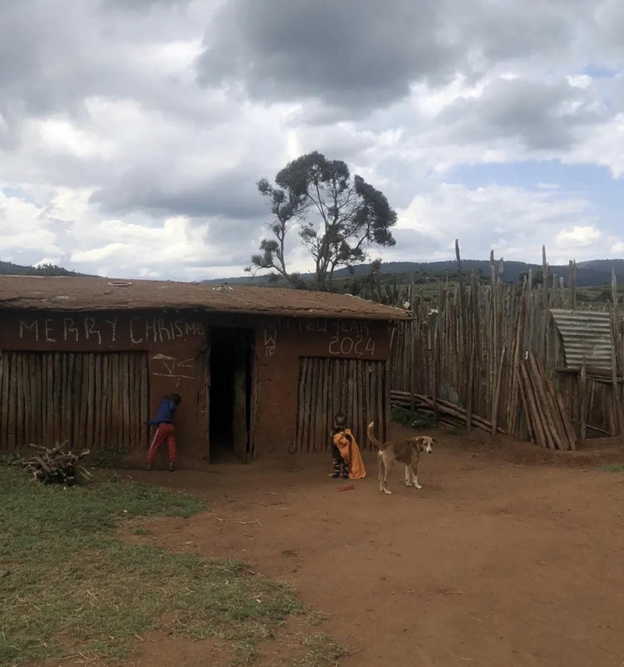
After eating, walking back through the neighborhood to the main house, something caught my eye. Children and dogs were running around the house playing. My gaze fell on a child drawing something on the wall. Above  the drawing was “MERRY CHRISTMAS” and “HAPPY NEW YEAR 2024” written  in capital letters. I asked whether they celebrated Christmas. A clear no and a smile: “We are not Christians — we believe in Enkai.”

Unlike the Maasai, most Samburu did not have access to educational opportunities. Most of their exposure to Western education came much later.  The missionaries converted the Maasai and the colonial government built schools in the south, but the Samburu in the north were made invisible and unworthy of the Christian and colonial institutions. The world has since changed, the world has become more interconnected and inequalities in educational access are being supplanted by other information pathways like the internet and social media.

At sunset over the wide mountains, I sat with another person I’d met on my journey. He was on his phone, and I could see he was online. Not even the Samburu are safe from the pervasiveness of social media. I thought we would talk, exchange pleasantries or even a long conversation that could cure some of my curiosities. We had barely exchanged a sentence when he held his phone to my face and started recording. A minute later, he had saved four TikToks. He laughed as he searched for the next sound to go with the video posts. He went back to his phone and not two sentences passed between us that evening. Afterward I asked myself: was I being used for content or we had simply all became slaves of the algorithm? It seemed that our desire was only to feed it more and more content while we could barely speak with each other.

Although I had been traversing the wilderness of northern Kenya, feeling imprisoned and lamenting about the state of underdevelopment, the young in Samburu had refused to be invisible, to remain locked away. Even though he could not have a conversation with me, in a way, Tiktok had given him a new voice and ability to connect with people far beyond the boundaries of Samburu.  I almost begun moralizing about the dangers of TikTok algorithms, but caught myself mid-thought: it would be coming from a position of privilege, the kind of access to the internet, social media, and all manner of communication pathways that many young people in Samburu did not have.  

After more encounters with young people though, it seemed as though nkanyit was disappearing with the elders. The new generation was aware of nkanyit but unwilling to fully reckon with it. The closer we rode to towards the mountains of the north, the clearer the loss of nkanyit became, yet no one was speaking to me about the loss.  On a long bus ride to Maralal, I found some answers.  I met Lenai Pashpash — a proud warrior of the north, whom I would later come to know as a friend.

Lenai said in Swahili: “Nkanyit ni nidhamu, heshima or respect, na kwangu ni kitu muhimu sana, juu bila nkanyit you’re just a less valued person in the society, nobody wants to associate with you.” (Nkanyit is discipline and respect, and for me it is very important, because without it you are simply a less valued person in society, and nobody wants to be associated with you.)

As a warrior, you must be strong. You must have pride. He was full of it. But far more important was the grief I felt in his answer when we spoke about the loss of nkanyit.

“Kwa sasa kuna tofauti kubwa, mitandao ya kijamii imeharibu vijana kwa kiwango kikubwa, na hiyo nkanyit imeenda chini sana.” (Right now there is a big difference — social media has strongly damaged the youth, and this nkanyit has fallen sharply.)

Damaged? A strong word but it fit perfectly with what I had observed. The respect Lenai had described was nowhere to be felt. I could barely walk twenty steps through Maralal without being approached by a young man asking for sex. Being asked was only the first attempt. There were other efforts to persuade, to touch. I asked why and the only answer was laughter.

I was afraid of the loss of nkanyit, of something that was never mine to uphold. I wondered whether these feelings of loss were even mine to carry. It wasn’t clear to me whether I was afraid of the loss or afraid of change. I came from a place where racism is the norm, forests have been replaced by skycrapers, and hookup culture has replaced real love. I was in no position to demand that nkanyit should be preserved, or that people and cultures should not change. I was admiring a single cultural element because I was an outsider, and had become no different from the many that had singled out certain cultural practices as exotic and marketable. I can long for the preservation of the Samburu culture, but as who?

Sign up to receive the most diverting fiction, essays, analyses and news across Africa in your inbox, on Monday every week.

We don’t spam! Read our privacy policy for more info.