
Six times every day I pause what I am doing and find a toilet. I wash my hands and pass a thin plastic tube along my urethra and bladder allowing urine to run out through the tube. When it stops, I take the tube out, wash again and continue my day. It takes a few minutes. It keeps me alive.

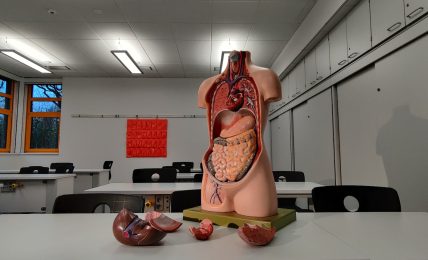
My bladder has failed. It fills normally but no longer empties itself. Remaining urine breeds infection and stretches the bladder. In time the pressure backs up towards the kidneys and ruins them. People have always died this way, slowly and in pain, and in many places they still do.

However, clean intermittent self-catheterisation (CISC) saves lives. In 1972, urologist Jack Lapides showed that all that was needed was clean hands, a clean place, a clean tube and a regular routine. People could do CISC for themselves. This moved bladder care out of the hospital and into ordinary life, removing the need for a catheter left inside the body day and night, with greater infection risk.

All sorts of people need it. Some have injured their spinal cords, often in road crashes or falls, were born with spina bifida, have diabetes or multiple sclerosis, are men whose swollen prostates blocked the way for too long, and some are women recovering from a hard birth or an operation. Some, like me, have bladders that stopped working for reasons no neurologist can find. Africa has all these people, in every town and village, though hardly anyone has counted them.

Here is what I most want you to understand. CISC is not a treatment that happens in a clinic. A clinic teaches it once and then, six times a day, it happens forty-two times a week in homes, schools, offices, farms, markets, churches, mosques, motor parks and long-distance buses. A tablet can be swallowed anywhere. A catheter needs a place, and it works only if the day has room for it.

So picture an ordinary day. Ask what the procedure needs.

It needs a catheter. In Britain the National Health Service prescribes them, a new one for every use. Across much of Africa, families must find and pay for their own, if a pharmacy stocks them at all, so one catheter is often washed and reused. There is no shame in that. It is how Lapides’s own patients managed, and for many people it is the only way. But nobody knows the long-term effects of reusing catheters year after year, and there is no agreed way of cleaning them. Families are left to work it out alone. To get it wrong.

CISC needs clean water and soap, several times a day, wherever the person is. It needs a private space with a locking door, somewhere clean to put things down and enough light to see by. Now think of the toilets at a village school or a market. A 2024 review in the African Journal of Disability, by Denis Nono and colleagues, gathered the evidence on children with spina bifida in low-income countries. It found these obstacles: public toilets the children could not use; catheters were unavailable or the wrong kind; poor technique training; and stigma and fear. It also found what helped was support from family and community, good training, follow-up by health workers and low-cost materials, reused catheters among them.

CISC needs time and permission. A pupil must be allowed to leave the classroom without having to explain to the class. A person must be able to step away from the desk, from the till or the field, without losing pay or a job.

CISC also needs to be speakable. I am a psychologist, and I know how much heavier any routine becomes when it has to be hidden. Bladders are not polite conversation anywhere in the world. When people cannot say why they need water, the toilet and time, they go without and going without is what kills.

I am a visiting research professor at Nnamdi Azikiwe University in Awka, Nigeria, and I catheterise in England and the United States. I do not pretend to know from the inside what it is to do CISC in a compound with a shared latrine, or on the road from Awka to Lagos. Those experiences belong to the people living them, and I hope this essay will find them. My own body has taught me that the tube is the easy part and that the day around it is the hard part.

CISC does not take a miracle to build into a daily life. What it takes is affordable catheters stocked in ordinary pharmacies and primary health centres. It also takes governments and insurers to count catheters as assistive products, as they do with wheelchairs and hearing aids. The World Health Organisation left catheters off its 2016 list of fifty priority assistive products, and a revised list, in consultation since 2025, proposes to recognise them. African health ministries need not wait.

Honest, locally tested advice on cleaning and reusing catheters is needed, as are nurses and community health workers who can teach CISC technique, and then teach it again. It needs schools, workplaces, markets and transport hubs with running water and a toilet that locks, which would serve everybody else as well. And it would take people who catheterise, and their families, to say so out loud.

A catheter is a small thing. What CISC asks of a society is larger, namely a place, a tap, a few minutes and no shame. With these, a failed bladder is something a person lives with for decades. Withhold them, and it is something a person dies of.

Sign up to receive the most diverting fiction, essays, analyses and news across Africa in your inbox, on Monday every week.

We don’t spam! Read our privacy policy for more info.