From Dreams of Becoming a Doctor to Writing for Change
In a crowded corner of a small Pakistani library, I picked up a pencil for the first time since leaving Afghanistan.
 by
by 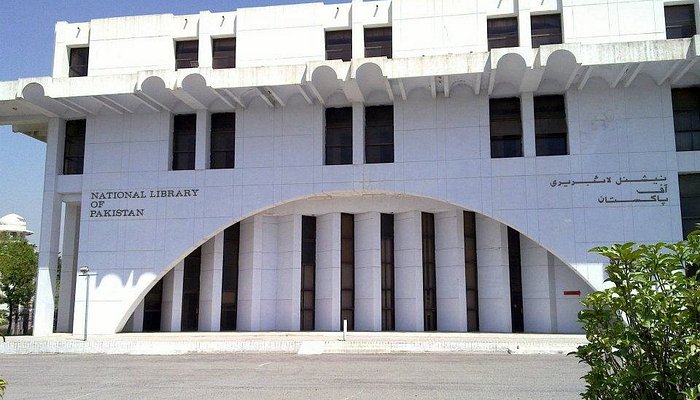


In a crowded corner of a small Pakistani library, I picked up a pencil for the first time since leaving Afghanistan.
by In a crowded corner of a small Pakistani library, I picked up a pencil for the first time since leaving Afghanistan. Once, I dreamed of being a doctor. But as that pencil scratched across paper in a strange new land, something inside me changed. This is the story of how a simple writing tool carried me from broken dreams in Kabul to a voice that now travels the world.
I grew up in a dusty village, far from Kabul’s bustle, but my childhood was a rich tapestry of dreams. Our home, nestled beneath a canopy of almond trees, breathed with life—cool water in the yard, a gentle breeze through the branches. Every day, I walked to a small private school, my heart swelling with possibility. My world was simple, but every afternoon, I ran home, bursting with stories. I was the brightest in class, always reaching for the top, driven not just by success, but by a future that I believed was waiting for me, just out of reach.
On those calm Friday holiday afternoons, my father and I would go together to a quite garden, a small hidden place behind the old stone walls. He delighted me with small treats, each step, each shared laugh, was a precious memory. As we walked, his hand rested on my shoulder, and he met my eyes, and asked, ‘Son, what do you want to become in the future?’ And in that moment, time stopped. I looked up at his beautiful face, then down, and whispered, ‘Doctor.’ From that day, every school morning, that dream clung to me, a silent fire, growing stronger with every step I took toward it.
And every night, as I lay in the still darkness, I stared at the ceiling, the weight of that promise pressing into my chest. Alone in my small room, I clung to the memory of my father’s gaze, his hope lighting a fire inside me. Every glance toward him was a silent vow. I will become a doctor. I was just one child in a vast world, but in that fragile moment, every dream I held became a heartbeat, pulling me forward with a fierce, quiet determination
As I grew older, standing at the edge of my final year of high school. Those moments with my father became the brightest part of my days. His gentle question, his unwavering faith, lit a fire inside me. A quite, steady spark that grew stronger whit each word. Each morning, I woke with a spark, imagining a brilliant future beyond these village walls, envisioning a place like a university, where every dream I had would finally take flight. I could see myself walking across campus, surrounded by endless possibilities, where each step I took was a step toward a future I dared to believe in.
But as I poured over books, as I walked the familiar roads, that dream grew heavier with each passing day. It all shattered when the Taliban took over in August 2021. My father, the bedrock of our family, the one who saw every small victory in me lost his job. And with that loss, the fragile dream we had built collapsed, and the world I knew dissolved into uncertainty.
The night before we fled, my heart felt like a drum beating in my chest, faster, harder, with every passing minute. My father rented a tiny, dark room, where the seven of us huddled, it was surrounded by the few belongings we dared carry. Each item a fragile thread to a life we were leaving behind. My father’s face was drawn, his disappointment like a shadow on his brow, but his love never wavered. In that stillness, I felt my world crumble and yet rise all at once. We held each other, saying goodbye without words, as we packed quickly, one last glance at the almond trees swaying outside. And as the dawn broke, my father, with a heavy sigh, hired the bus that would carry us away to Pakistan, where the real test of our courage and our hope was about to begin.
“I thought, maybe, this bus ride would lead to a better life. I sat by the window on the right, watching the world blur. Dusty roads, barren deserts, and occasional flashes of green trees. I dreamed of what could happen if this journey brought us peace. But as the bus rumbled on, something heavier pressed against my chest. For the first time, I felt fear unravel me. My dream of becoming a doctor—so vivid just days before—began to crack.
Crossing the border between Afghanistan and Pakistan was harder than I ever imagined. And yet, even as I stepped off that bus, the wind almost dragging me back, I looked down at my worn, black sneakers with frayed laces, every step uncertain. I wondered: would I ever dare dream again? Beside me, my little sister, her cheeks pale, her ponytail trembling, clung to my father’s hand. One small hand in his, the other shaking in fear, back and forth, back and forth, as if it could stop the world from spinning. And when we arrived in Pakistan, that fear was a weight we carried in every step. I looked down at my sneakers, and I knew, life in Afghanistan was gone, and here, I was, standing in a new world, full of fear, uncertainty, and a trembling hope.
As the fear weighed on us, every movement I took in those worn, black sneakers, frayed laces dragging, made me realize how starkly different life had become. Afghanistan had been full of color, possibility, but now, as a refugee in a tiny, suffocating room in Rawalpindi, Pakistan, it was a brutal void. We were crammed on the second floor with strangers I barely knew, under a ceiling blackened with mold, crawling with insects that lurked unseen. The walls we leaned against were damp; I could smell the heavy, musty rot in the air.
My dreams, once so bright, crumbled in that suffocating silence of the room. Most days, I couldn’t utter a single word; my voice felt buried, suffocated, as if lost in the same darkness clinging to those walls. I was a boy who once dreamed of healing others, now a shadow, lost in isolation. Hours and days passed in silence; I lived inside a fragile shell of hope of becoming a doctor. And then, one day, I found a small library, tucked away on the third floor of an old apartment. It was tiny, barely a few shelves, but it became a miracle in my life. Each day, I escaped to that quiet place, just a small routine to break free from the dark, and there, as I turned the pages, new ideas took shape. My isolation grew as I read, but so did a quiet fire inside me. Each sentence, each page, pulled me toward a dream I dared to hope for again.
One afternoon, as I sat in that suffocating, dim room, a call came through on my father’s phone. His voice, soft and hesitant, carried the weight of something unexpected. When he set the phone down, his expression flickered with surprise, and for a moment, the ache of the room faded. My bare feet pressed into the floor as I watched my fingers twist together, still lost in that dream of becoming a doctor, anchored by the promise I made my father. Then he looked at me, his dark, kind eyes holding mine, and with a faint, hopeful smile, he said, “Son, get ready. We’re going to see a friend of mine, who just arrived from Afghanistan.” In that moment, a spark lit inside me. I nodded, feeling a fragile thread of hope, and prepared myself.
As we left that cramped room, each step felt like a heartbeat in the unknown. In Pakistan, the streets came alive with faces I didn’t recognize. New generations, different cultures, each adorned in colors and styles I had never seen. And as I moved among them, I felt those fragile dreams rise again. I saw a man in a white T-shirt, a device pressure hanging around his neck, helping a woman from an ambulance. In that instant, my thoughts drifted back to Afghanistan, to my father’s proud smile, to the promise that still burned inside me. And though I couldn’t see what lay ahead, I knew that somewhere, just beyond the horizon, a new possibility was waiting for me.
Finally, after driving along streets blanketed in green—lined with plants, creeping vines, and swaying fields on either side—we arrived at my father’s friend’s home. He stepped out, a gentle man with kind eyes behind his glasses, his fluffy hair framing a warm smile beneath a blue T-shirt and black jeans. He greeted me with a firm handshake, and though I was nervous, I introduced myself as a student. He welcomed us with patience, his smile easing the weight I carried. In his home, sitting at a small table with his two children, we shared a simple meal. And as I listened to my father and his friend recount their journeys: the hardships, the struggles, and the fragile hope that carried them. I realized, even in silence, that I was gathering the first seeds of my own path.
In the end, my father’s friend suggested we take a small walk in the park. The air was rich with green trees arching above us, vines twisting, and the sun warming every corner. As we strolled, he drew a horse on a piece of paper, a simple sketch, but it was radiant. I reached for a blank sheet, my hands trembling, and asked him to draw something for me. But when I searched for a pen, I realized I had none. He also kindly asked for a pen then his daughter. His daughter shrugged “ohm…. BaBa, I think I have lost my pen” she had a glance toward his father then stayed silent. I asked other people around the Park, even in my broken English, but no one could help. His face fell; he too searched, but he had nothing. I felt a deep, aching despair. The picture of that house was swirling in my head again and again. And as we drove away, I wept silently, asking my father why this small thing was out of reach.
From that day, I never left home without a pen or pencil, no matter how little I had to eat or have, in that library—my refuge, my daily ritual—I opened a book it was old and had that dusty, musty smell I love. The author is Khalid Hosseini probably living in us by now, as someone I had never heard of before that day. The book is and dreamed of becoming a doctor. But on this day, as I turned each page of a book called The Kite Runner, something inside me shifted. I clutched that blue pencil, my fingers tracing its shape like a lifeline. On blank pages, I began to write. In that dark, dim library, with only a few books, I filled 21 pages with raw, emotional lines. I couldn’t believe how time slipped away. I was lost in each sentence. And step by step, with every word, every line, I became a writer, an author. I realized, in that fragile moment, that a single act, a single word, a small step—like a walk, like a pencil—can transform everything. And from that day, my life became a testament to hope—how one small action, taken in a dark place, can spark a light that leads you to the world you always dreamed of.