
The bus to Kisumo leaves at dawn but I haven’t slept. Three weeks of this. Lying awake with my book pulsing somewhere outside my body, a separate organism now, breathing without my lungs. Joy and grief occupy the same vertebrae. My spine can’t tell them apart anymore. An organ rides with me in the backseat like a newborn I do not yet know how to hold. Some pages stain with the smudge of those years; cancer’s marauding shadow, fatherhood stumbling awake and grief taking up a gentle room in my liver but as the car dips into valleys where the sugarcane leans toward its own shadows, I think of only one reader whose eyes matter. My dani. Marie. My first teacher, my original interior library.

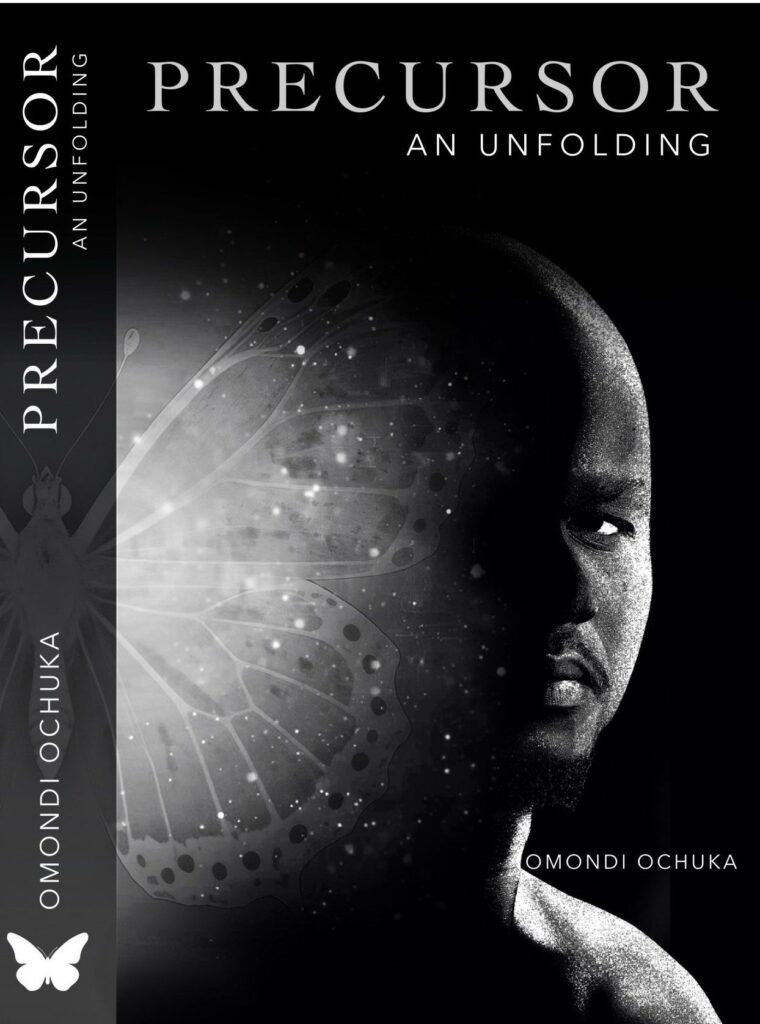
The road to dala is always unwinding me into a confession. A long unspooling of days where sleep refuses to anchor me and my body bleats with an exhaustion braided with gratitude. My book sits wrapped in brown paper on my lap. Precursor. Six years of composition while dana’s mind performed its cartridge of forgetting. Now it exists bound, physical and bearing her name in the dedication. I spent the night touching the cover, feeling sick with accomplishment and loss, that particular nausea of creating something permanent while watching someone become provisional.

Even before the city’s humidity thickens at the edges of the lake, the nights behind me stack themselves into brittle plates. Nights of drafting and tearing, revising, arguing with ghosts, wondering whether memory is a rope or a river. I bring all that restlessness into this homecoming. I am gut-full with joy-grief and the double-edged brightness of knowing she will finally hold what I’ve spent years breathing toward.

Through the window, the landscape scrolls past in early light. I’m bringing home proof that my imagination didn’t stop and the act of making persists even as (our, mine and hers) memory dissolves but what does it mean to offer a book to someone who may not hold its narrative thread from one page to the next?

Philosophy question one. If understanding is reconstruction rather than reception, what happens when the architect loses her blueprints?

The shuttle climbs through Kericho’s tea terraces and I remember that road trip to Uganda when I was 8. Dani drove us to Makerere to visit Baba, windows down, her voice loud with Luo songs. She made us memorize the route by landmark; the fever tree at the border, mosque with the crooked minaret.

She frowns now, trying to locate some coordinates of her memories.

“We went?” she asks softly.

“Yes, dani. You told me not to fear wide countries.”

She nods, though the past flickers out. A nyangile in wind. She repeats my sentence three times, the same cadence, the same gentle tending and each repetition is both a wound and a blessing. Memory remains a country she re-enters only in fragments.

“Memory is rehearsal,” she said then. “You practice it or it disappears.”

Now the medicine can’t slow it down or make it better. The longest road trips exist only in my keeping.

When I walk into the old compound, the late-afternoon air holds that baked stillness only Nyakach understands. Children shouting somewhere past the fence, a goat complaining, distant boda engines droning their forgotten promises. Her window lets out a wash of pale gold light along the corridor. Her silhouette sits by the bed edge, spine straight, hands folded, awaiting for a word she had already memorized in another life.

She’s standing at the kitchen window, backlit, her hair a crown of white where it used to be salt-and-pepper. Six years have erased the brown entirely. She turns and there’s that half-second delay before recognition lands.

“Omuk lela.”

My throat closes. An uprooted plant. Daylight vastness. She hasn’t called me this in three years. A nickname from when I left for university, her way of saying I belonged everywhere and nowhere. I set down my bag and the book stays hidden inside.

“Mama.”

“You look tired.”

“The bus was long.”

We stand in her kitchen, which she’s reorganized again. The cups live where the plates used to be. She’s created a new logic that makes sense only to her present self.

Philosophy question two. Is home the place that remains constant or is home the person who keeps adjusting until constancy is irrelevant?

She’s made chai, too strong and too sweet, exactly right. We sit at the table. The same one where in 2016 we learned my cancer had metastasized and felt our chests cave in unison. The same table where, six years later, she beat Awuor at chess and I died a bit inside because it meant she was still sharp enough to strategize, still present enough to win. I’m not angry at her. I’m angry at luck.

“I brought something,” I tell her.

She waits, hands around her cup, and I realize she won’t ask. Asking requires curiosity about the future tense and increasingly she lives in a permanent present that doesn’t lean forward.

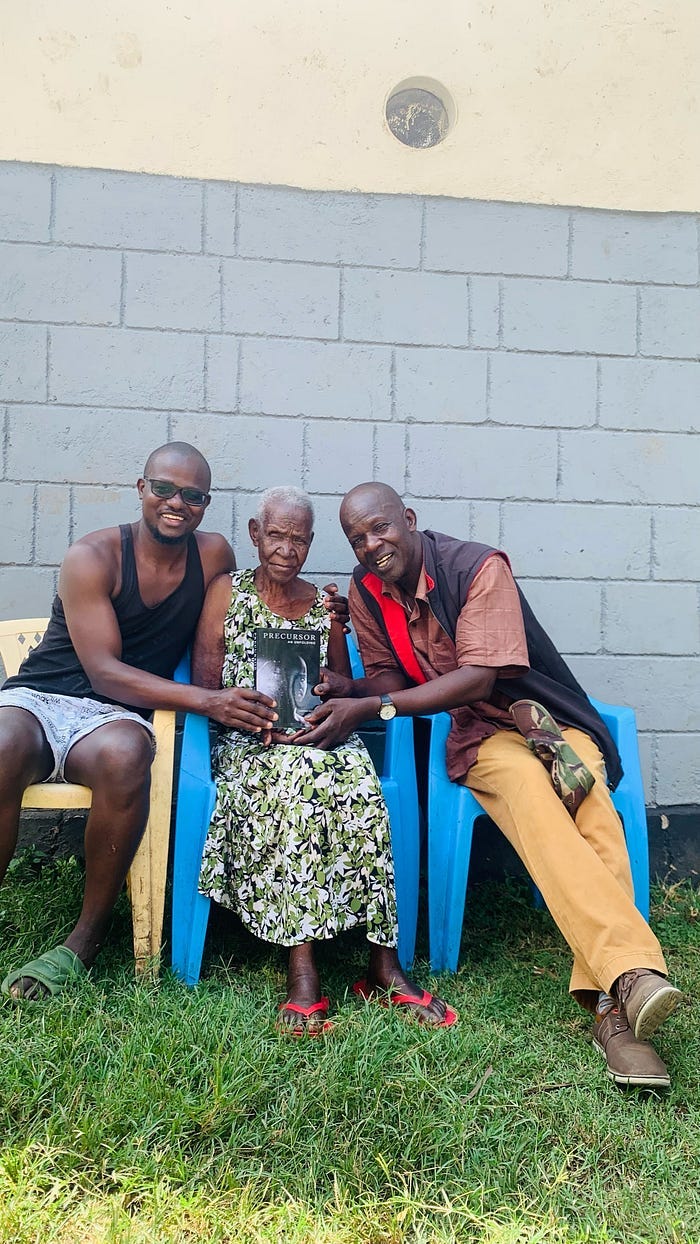
I unwrap the book and place it between us.

Her fingers find it first, tracing the cover before her eyes focus. I see her read the title, then her own name in small print. For Dani, who taught me not to stop.

“This is yours?” she asks.

“This is ours,” I say. “You’re in every page.”

She opens it slowly, the way you’d approach something fragile and I see her trying to organize the words into meaning. Her lips move. Her sentences float past her like togo swaying on river Nyando. She grasps one, then it’s gone.

Philosophy question three. What is authorship when the muse can’t remember teaching you? What is gratitude when the recipient can’t hold the shape of what she gave?

Evening, I ask if I can brush her hair. She sits in the chair by her eastward-facing bedroom window where light comes in amber and horizontal. Six years ago, this same window, this same chair, but her hair was darker and her hands didn’t shake when she held my early drafts, marking them with questions I couldn’t answer yet.

I groom her hair. I’ve done this ritual my entire life, combing each strand with the respect one gives scripture. Her scalp is warm, her breathing steady. She leans her head back, eyes closed, and begins to sing an old hymn I haven’t heard since childhood.

Now I run the brush through white strands, careful with the tangles. Her scalp is visible in places. Time is making her translucent.

“Tell me what you wrote,” she says.

So I do. I tell her about the chapter called “Erokamano”. Thanksgiving, gratitude and the untranslatable thing of being indebted to someone’s blessings. I wrote it during her early Alzheimer’s onset, when I first understood that I would lose her while she was still alive. I tell her how that chapter argues that love is the practice of imagining the other’s inner world, even when that world becomes unmappable.

Tonight, the humming quivers, then steadies. She mumbles through a chapter I read aloud. Erokamano, the gratitude chapter. Her favorite word for blessing the littlest mercies of surviving.

“Erokamano,” she repeats, tasting it like a tangerine she once grew in her nyakrundu. “You remembered the storms well, my child,” she adds.

Storms. The metastasis years, the kitchen table where we sat as test results spread their darkness into a bloated ink. The day my chest caved inward and yet I pretended I still had a map. She remembers none of that clearly now but she remembers my face during those months, and that is brittle.

She listens, head tilted into my hands, and I can’t tell if she’s following or simply enjoying the sound of my voice. Does it matter?

Philosophy question four. Is communication the transfer of content, or the ritual of reaching?

“Read to me,” she says.

I find the passage. My voice stumbles at first.

“Dani taught me that imagination is an ethical stance. Imagining grants the other person dimensionality beyond your own needs and constructs them in their fullness even when you can only see fragments. When she began forgetting, I learned the reverse that to be imagined is to exist in someone else’s more permanent keeping. I became the one who imagined her whole, relived her stories so they wouldn’t vanish entirely. This is the burden and the gift. We become each other’s blessings.”

She reaches for the book, peering through her glasses. “This is what you wrote?”

“Yes.”

“Good boy. Say grace.” She smiles, sudden and whole, sunlight breaks through cloud cover.

“You always had words.”

“Good. You were always building worlds faster than your hands could hold them.”

I kiss the top of her head and feel the grief-joy splitting me open again. She doesn’t remember that she taught me to have words. She doesn’t remember the thousand small lessons that made this book possible. She’s proud. Right now, in this present tense, she’s proud.

Philosophy question five. If memory is the narrative we tell about continuity, what happens when we accept discontinuity as its own kind of truth?

She doesn’t need to remember teaching me. It’s enough that the teaching happened and I’m here and the book exists as evidence of a transaction neither of us can fully recall.

“Do you know,” she began, tilting her head as though listening inward, “the mind remembers the way soil remembers rain?”

I didn’t answer. I let her unravel her own metaphor. She rubbed the spine of the book with her thumb; gentle, circular, smoothing a scar.

“Some things rot,” she continued. “But the roots don’t mind. They drink whatever remains.”

It took me a second to realise she was speaking of herself. Of us. Of memory thinning out into a field abandoned too long yet in her phrasing, I heard no despair; only an acceptance that felt older than her years. I wondered whether decomposition, in her world, was not an ending but a soft rearrangement of form.

“Does that frighten you?” I asked.

She gave an amused sigh. “Fear is for people who think memory is the whole person.”

I opened my mouth to argue but she motioned gently, don’t. I let the thought hover. Love, perhaps, is not held in recollection but in something more circular, more instinctive, like sap rising even when the branches look dead.

Her gaze wandered to the window. “You know,” she said after a long pause, “sometimes forgetting is an afterlife with the body still attached.”

That startled me. She said it with a casual tone, almost playful, yet something shook beneath it. She was not asking for reassurance; she was simply moulding the strangeness of her own mind. I could only nod.

“And you…” she shifted her eyes to me, sharp for a moment. “You spend so much time trying to carry everything. Why do you fear letting go?”

A question as precise as a needle. I wanted to tell her about my rewired relationship with gratitude, the relief that follows terror and how every remission is, for me, a borrowed hallway I tiptoed through. She already knew. She had seen me in those years, skeletal metaphors stitched into my cheeks, chest echoing with okego and panic. She knew the relics I built to hide from pain. She had helped dismantle it.

“Some wounds,” she said, reading my thought, “are teachers. You don’t choose them. But you attend their classes.”

We both laughed softly at this; her breath a little thinner, mine tangled in old shame.

“You think I’m disappearing,” she added. “But I wonder… maybe I’m simply becoming lighter.”

I did not know how to hold this. What remains of a person when names slip, sequences blur and time becomes a loose net they fall through? I saw her searching for a word she couldn’t retrieve, frustrated for only a moment before yielding to the forgetting with a strange, dignified calm. It was then I saw the essence was still there. Not in the nouns. In the way she looked at me. A recognition distilled, not erased.

“The mind,” she said suddenly, “is not a house. Too many rooms. Or not enough.”

She considered this, shook her head.

“Maybe a tide. Or a wandering creature. It goes where it wants. I no longer chase it.”

I let myself imagine her mind as a slow animal moving through tall grasses glimpsed and not captured.

“Taking care of you…” I began.

She cut in, soft but firm. “Is not charity. It is love returning home.”

That landed deep. I felt something inside me loosen. Some guilt I had mistaken for devotion.

She closed the book then, fingers resting atop it like someone sealing a letter.

“And you… why do you write all this?”

I hesitated. She smiled knowingly.

“Is it to bind the things that run away?”

The question was so gentle that the dusk leaned in to hear it. I couldn’t tell if she was teasing or dissecting a truth I had only circled around.

“Doki,” she whispered, eyes half-closed. “You hear me even when I forget what I meant.”

She was right. Some conversations do not need memory to survive. They root themselves elsewhere beneath language, chronic love and the mind’s unpredictable tide. A durable terrain where love keeps its most faithful archive.

Evening grows older. Lizards scuttle across the roof. A distant preacher’s voice threads through the open window. Another funeral, another lament stitched into dala night. I close the book and place it beside her. She taps my hand.

“You are still my daystar,” she whispers. “Even when the sky loses its map.”

I swallow whatever grief rises. Tonight is not for mourning. Tonight is for warmth, grace and gratitude of being here six years into her forgetting and yet somehow thirty years deep into her knowing.

I tell her about Awuor. She keeps diaries the way dani once taught me and stares out windows with that same contemplative posture.

“She has your calm boldness,” I say.

Dani smiles, eyes glistening. “Then she is my prayer.”

Night gathers itself. She drifts toward sleep, her white hair catching the lamp’s glow like frost in early dawn. I sit at the edge of her bed, listening to her breathing, thinking of all the versions of her living inside mine. The mentor, matriarch, philosopher, stern teacher and the woman who called my coma a desert prophecy and swore I returned with sand still in my eyes.

Next morning, I wake to find her already awake, sitting at the kitchen table with Precursor open. She’s on page forty-something, running her finger along the lines like a child learning to read. I don’t know if she started from the beginning or opened it at random. I don’t know if she knows she’s reading her grandson’s book or if it’s just interesting text that happened to appear.

Chieng’ jamondo,” she says without looking up. “Early rising star.”

I go still. She hasn’t called me this in even longer; my childhood nickname, from when I’d wake before everyone else and find her already in her garden, hands in soil, talking to her tomatoes. She’d call me her early star, her morning person and we’d have the world to ourselves before it got loud with siblings and obligations.

“You remember,” I say, voice rough.

“Remember what?”

There it is. She said the words but they’re unmoored from their natures. A nickname floated up from wherever language lives in her brain, some preserved pocket, but it doesn’t have its baggage of context. She doesn’t remember the mornings, garden or particular quality of light through dew-covered leaves.

Philosophy question six. Are words meaningful only when attached to memory or do they carry weight simply by being spoken, by creating the feeling of connection even when the story behind them is lost?

I make her breakfast. Scrambled eggs, toast and sliced mango. She watches me move around her kitchen and I can see her trying to place me. Husband? Grandson? Nephew? Some familiar young man? Her face cycles through attempts at recognition.

“I’m here because I love you,” I tell her. Not “I’m your grandson.” Not “Don’t you remember?” Just the present-tense fact.

She nods. “I can feel that.”

This is what we’ve learned. Feeling precedes knowing. She can’t always name me but she senses the shape of our bond and the accumulated weight of decades.

Philosophy question seven. What is the self without memory? Is she less dana because she can’t summon her own history or is she more essentially herself; personality distilled down to temperament, instinct and water boiling in the stove?

On the third day, we sit together in the late afternoon, her bedroom window framing acacia trees going gold in the horizontal light. She’s taken to arts and crafts recently. Paper collages, painted stones and woven things made from raffia. Her hands still work even when her mind wanders. The coffee table is covered with her creations.

“I wish I’d started you on these earlier,” I say.

She glances at me, curious. “Started me?”

“When you could remember making them. So you could see your progress.”

“I remember making them,” she says, defensive. Then, softer: “I think I do.”

I shouldn’t have said anything. What does progress mean in this context?

Philosophy question eight. If we can’t track our own becoming, are we still becoming? Or is there dignity in the static present, in making things simply to make them, unmoored from achievement or accumulation?

“They’re beautiful,” I tell her. “You have an eye for color.”

This pleases her. She picks up a painted stone, turning it in the light. “I like keeping my hands busy.”

I think about June 2012, my coma that lasted forty-three days. What she calls my desert prophecy. The time I was gone, unreachable and she sat by my hospital bed imagining me back into existence. When I woke, she told me she’d refused to let me die, she’d pictured my future in such detail that God had no choice but to return me to it.

“What are you thinking about?” she asks.

“You,” I say. “How you saved my life.”

“Did I?”

“You did. You sat with me when I couldn’t wake up. You imagined me well.”

She considers this, face serious. “That sounds like something I would do.”

Philosophy question nine. If she can’t remember saving me, does her act of salvation diminish? Or is this the deepest grace that love persists even after its own origin story evaporates and we can be shaped by what we can’t recall?

Later, Awuor calls on video. Round-cheeked and shy. I named her after dana’s mother, a woman I met a few times but who lives in family stories as the one who taught dana to read, question and imagine beyond her circumstances.

“Show yourself to nyathina,” I tell her.

My daughter’s face fills the screen and dana leans close, adjusting her glasses.

“Who is this?” Dana asks.

“My daughter. Your great-granddaughter. Awuor.”

“Awuor,” dana repeats. Something shifts in her face. “My mother’s name.”

“Yes.”

She touches the screen, gentle, she might feel her skin through glass and distance. During Awuor’s last visit in 2022, dana held her for an hour, tracing her smooth face, saying over and over: “She looks like Akinyi. Just like Akinyi.” My mother. Dana’s daughter. The chain of women unbroken even as memory breaks.

“She’s beautiful,” Dana says now.

Awuor babbles something about her friends, and I watch dana watch her, a look of concentration people get when they’re trying to hold onto something slipping. When the call ends, she sits back, exhausted.

“I forget so much,” she says quietly.

It’s the first time in months she’s acknowledged it directly. I take her hand.

“I know.”

“But you remember.”

“I remember.”

“Then keep imagining,” she says, voice suddenly strong. “That’s all that matters. Don’t stop imagining. The day that you do is the day that you die.”

There it is. Her teaching, surfacing from bedrock under erosion.

Philosophy question ten. What is the relationship between imagination and existence? Is she telling me that imagination creates reality or that imagination is reality and we exist only insofar as we’re held in someone else’s mind, rehearsed, reconstructed and loved into being?

On my last evening before taking the bus back to Nairobi, we sit again by her window. The light is bruised purple and her hair glows against it. I brush it one more time, working oil through the strands to keep them soft.

She has the book in her lap, though I don’t think she’s been reading it. Just holding it. Just knowing it’s there.

“I raised a writer,” she says.

“You raised a lot of things.”

“A fighter. A questioner.”

“Yes.”

“Someone who doesn’t stop imagining.”

I lean forward, resting my forehead against her shoulder. She smells of coconut oil and old paper and something indefinably her that I’ll know anywhere, always.

“You taught me that love is a form of attention,” I say. “That to pay attention is to build someone a dwelling place in your mind where they can live even when they’re far away or changed or gone. I’ve built you a thousand rooms, dana. You live in every one.”

She pats my hand. I can’t tell if she’s following the metaphor or simply responding to my tone. Does it matter?

Here is what I know. We share a love of trees, diary keeping, window-looking, proverbs and David’s hymns. We share blood and language and the timbre of grief that sounds like gratitude because they’re both about acknowledging the weight of another person’s existence. She doesn’t remember teaching me these things but I remember learning them and as long as I remember, she isn’t lost. Not entirely. Not yet.

Philosophy question eleven. What is the calculation of memory? If I remember for both of us, do we together constitute wholeness? Can one person’s imagination compensate for another person’s forgetting?

I don’t know. I keep imagining anyway.

The day that I stop (imagining) is the day that we die.

The bus ride back is quieter. The book is not in my bag, already less mine than it was. I left the wrapped copy with dana. She’ll find it again and again, new each time, and maybe that’s its own gift. An eternally fresh discovery.

Outside the window, the landscape scrolls past in reverse. Kisumu to Nairobi. Trees giving way to matatu stops giving way to the sprawl of the city. I think about how we move through life while the people we love remain fixed, eroding slowly like stone in water. Some days she’s more herself than I expect and some days she’s a stranger wearing her face. I’m angry at luck and grateful for mornings and both emotions share the same space behind my ribs.

I text Awuor: Hey love, were you too young to understand?

We can’t stop the loss of thoughts but we can build archives in each other. We can imagine so vividly that the person continues beyond their own ability to continue themselves. We can brush their joy in evening light and read them their own influence in our words and we can mean it when we say thank you — erokamano — for everything they’ve forgotten giving us.

This is the practice. Attention, care and imagination. This is how we love people into persistence. This is how we refuse the small death of stopping.

The bus climbs into the Rift Valley and I close my eyes and picture daba at her window, eastward-facing, waiting for morning. Chieng’ jamondo. The day star rising, and rising, and rising.


***

Order Precursor (An Unfolding) now at Nuria Bookstore.

Sign up to receive the most diverting fiction, essays, analyses and news across Africa in your inbox, on Monday every week.

We don’t spam! Read our privacy policy for more info.